

What Happens After Brain Injury Rehabilitation? A Guide to Continuing Care and Support in Leeds
A brain injury can affect movement, memory, communication, mood and behaviour, often in combination. Rehabilitation plays a central role in recovery, helping the brain relearn skills and adapt to changes in function. But rehabilitation coming to an end does not mean a person's needs have ended too.
For many people, ongoing support is needed once formal therapy finishes, whether that means help with daily tasks, continued clinical care, or a more structured living environment. This guide sets out what continuing care after brain injury can involve, and what families should think about at each stage.
What happens when brain injury rehabilitation comes to an end?
Rehabilitation is usually structured around specific, measurable goals, set jointly by the person and their therapy team. When rehabilitation goals have been met, or the person’s rehabilitation needs have changed, the intensity or setting of rehabilitation may change.
National guidance recommends assessing the impact of a brain injury using a person-centred, individualised approach at every stage of the care pathway. This matters because the severity of the original injury doesn't always predict how complex someone's ongoing needs will be. Even less severe brain injuries can leave lasting difficulties, while the effects of more severe injuries vary considerably between individuals.
Discharge planning should consider the person’s ongoing rehabilitation, care and support needs.
Does someone still need care after brain injury rehabilitation?
Often, yes. If a person no longer requires intensive rehabilitation but still needs further support, a number of continuing care options are usually considered.
The type and level of support needed varies widely. Some people manage well with occasional check-ins and light daily support. Others may need regular nursing support, supervision or assistance with mobility, depending on their individual needs. Effects on memory, concentration, mood or behaviour can also continue well beyond the point where physical recovery has stabilised.
Because every brain injury is different, ongoing needs should be reviewed regularly rather than assumed to stay fixed.
What types of continuing support may be needed after brain injury?
Continuing support after brain injury can cover physical, clinical and emotional needs, often at the same time. Physical support might include help with mobility, personal care, or maintaining strength through regular movement. Where someone has complex clinical needs, such as PEG feeding, catheter care or wound management, specialist nursing support may be required.
At Alderbrook Care Home in Leeds, Specialist Nursing Care provides complex health needs who require round-the-clock clinical support. Where a brain injury has left someone with ongoing physical disability, Physical Disability and Neuro Rehabilitation support focuses on mobility, function and confidence, working alongside physiotherapists and occupational therapists.
When might residential care be appropriate after brain injury?
Residential care may be considered when a person’s ongoing needs cannot be adequately supported at home, including where they require regular supervision, personal care or nursing support.
Short-term respite care can provide temporary support while a person and their usual carers adjust to changing care needs. Respite Care at Alderbrook offers this kind of flexible option, giving both the individual and their usual carers a break, with the level of support tailored to the individual’s assessed needs.
It's important to be clear about what residential care does and doesn't provide. It offers day-to-day care, supervision and support. Medical treatment, diagnosis and prescribing remain the responsibility of GPs, neurologists or community rehabilitation teams.
What should families look for in a brain injury care setting?
Look for a team with specific experience in brain injury, rather than general elderly or nursing care alone. The effects of brain injury don't always follow the same pattern as other conditions, so staff need to understand that variation.
Ask how care plans are built and reviewed, and whether they're genuinely tailored to the individual rather than following a generic template. It is useful to ask how the care setting communicates with external health and social care professionals, including physiotherapists, occupational therapists and community teams, rather than working in isolation. Alderbrook's approach reflects this, with a multidisciplinary team working alongside external health professionals to support safe, well-planned transitions into care, as outlined on the home's referrers page.
Visiting in person is worthwhile too. A calm, accessible environment matters for someone managing fatigue, sensory sensitivity or mobility difficulties.
How can ongoing care support independence after brain injury?
Recovery from brain injury does not stop at a fixed point. The most visible progress often occurs during the first six months, but recovery can continue for years, although later improvements may be slower or less obvious.
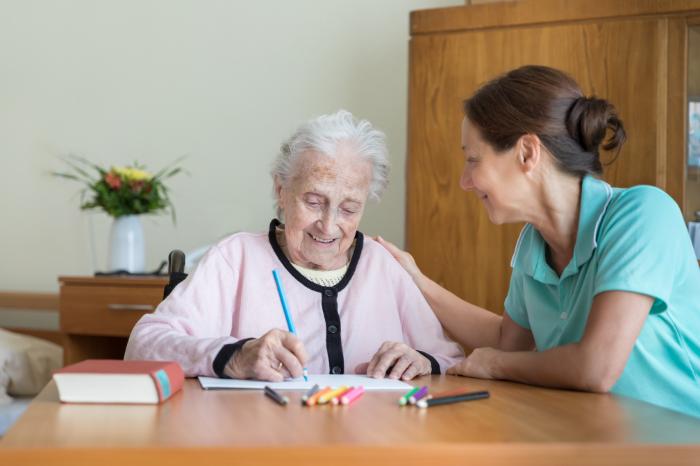
This is why structured routines and meaningful daily activity matter beyond the active rehabilitation phase. At Alderbrook, residents can access a tailored activities programme, including gentle exercise, music, arts and crafts, baking and other activities adapted to individual interests and abilities.
Independence after brain injury rarely means managing entirely without support. More often, it means being supported in the right way to do as much as possible safely.



How does specialist neuro-rehabilitation differ from continuing care?
Specialist neuro-rehabilitation is generally structured around individual goals and may involve several professionals working together to address physical, cognitive, communication and other difficulties.
Continuing care focuses on meeting ongoing support needs after the intensive phase of rehabilitation and may include residential or nursing care, intermediate care or support at home. The focus shifts from active gains towards maintaining function, managing complex needs and preventing decline, while still allowing room for further progress where it happens.
In practice, the two aren't always sharply separated. Good continuing care still involves therapeutic input; it's simply paced differently, reflecting a shift from intensive recovery towards sustained, day-to-day support.
What should families consider when choosing brain injury care in Leeds?
Practical factors matter alongside clinical ones. Consider how accessible the setting is for regular visits, and ask how it communicates with hospitals, community services and other professionals involved in the person’s care.
Alderbrook Care Home is set on Shadwell Lane, on the outskirts of Leeds, offering en-suite bedrooms and a calm, accessible environment for residents with complex needs. Families and professionals referring from hospitals or community teams can find details of the referral process, which includes a pre-admission assessment to confirm that the setting is the right fit before any move takes place.
Taking time over this decision, where possible, tends to lead to a better outcome than choosing under pressure.
Frequently Asked Questions
Can someone continue to improve after brain injury rehabilitation?
Yes. While the most noticeable progress often happens in the first six months, many people continue to regain skills and function for years after their injury, particularly with consistent, structured support.
What is continuing care after brain injury?
Continuing care refers to ongoing support once intensive, therapy-led rehabilitation has ended. It can include help with mobility, personal care, clinical nursing needs, or emotional and behavioural support, depending on the individual.
Can a care home provide rehabilitation support after brain injury?
Some care homes, including Alderbrook, offer ongoing rehabilitation-focused support through services such as Physical Disability and Neuro Rehabilitation, working alongside physiotherapists and occupational therapists to help maintain and build on progress.
When might residential care be needed after an acquired brain injury?
Residential care often becomes appropriate when someone needs round-the-clock supervision, complex nursing input, or a structured environment that's difficult to replicate safely at home.
What is the difference between brain injury rehabilitation and long-term care?
Rehabilitation is typically intensive and time-limited, aimed at specific functional goals. Continuing or long-term care is more stable and ongoing, focused on maintaining well-being and function while still supporting further progress where possible.
If you're exploring continuing care options for a family member after brain injury, the team at Alderbrook Care Home is happy to talk through what support might look like. You can get in touch or arrange a visit to see the home for yourself.